Light on Life: Closing Communal Session
Live Session: Sunday, December 13, 2026 | 08:00 UTC The Zoom link to this session is sent via our Newsletter, Whats’app & Facebook group
Knowledge, Practice, and Healing
We have sent a 6-digit verification code to your email. Please enter it below to continue.
We have sent a 6-digit verification code to your email. Please enter it below to continue.
Thank you for registering for Threads in Patanjali’s Wisdom online course with Dr. Agi Wittich
This page contains everything you need for eight weeks of rigorous inquiry into Patañjali’s Yoga Sutras: all sutras in Sanskrit, all reading materials, all reflective questions, and access to session recordings.
Download Course Syllabus | Add to Google Calendar | Find your local time here
Course Duration: December 2, 2025 – January 20, 2026
Meeting Time: Tuesdays, 8:00-9:00am UTC
In this orientation session we’ll explore the structure and history of the Yoga Sutras, the role of Vyāsa’s commentary in the tradition, and our three-perspective methodology (classical, embodied, scholarly).
Before the first session, consider the following questions:
You may be invited to share some of these in the zoom Session, but only if you’re comfortable.
We explore Patañjali’s foundational definition: “Yoga is the control of mental modifications.”
We’ll examine what does citta mean? What are vṛtti? What does “nirodha” mean? How do we work with the turbulent mind?
We’ll discuss three perspectives: Vyāsa’s classical commentary, Iyengar’s practitioner interpretation, and contemporary scholarly analysis.
Before our session, try the following:
Close your eyes for one minute and simply observe your mind. What do you notice? Is it busy? Quiet? Scattered? Focused? Anxious? Calm? How would you describe the quality of your mental activity? Have you ever experienced a moment of complete mental stillness—even briefly? What tends to make your mind more turbulent? What tends to calm it? When you practice āsana (if you do), what happens to your mind? Does it become more still or more busy? Have you ever been so absorbed in a pose that thoughts stopped?
Recommended Reading:
Light on Patanjali’s Yoga Sutra by BKS Iyengar
The Yoga Sūtras of Patañjali by Bryant
The Philosophy of the Yogasūtra by O’brien-Kop
We explore the twin pillars that support all yogic transformation: अभ्यास (abhyāsa – practice) and वैराग्य (vairāgya – detachment).
We’ll examine: What makes practice “firmly grounded”? What does detachment actually mean (and what it’s NOT)? How do these two seemingly opposite forces work together? What sustains practice over time?
We’ll learn Vyāsa’s framework, Iyengar’s embodied understanding, and contemporary analysis of how practice transforms consciousness.
Before our session, consider: What does the word “practice” mean to you? Do you have a regular yoga practice? If yes, how did you develop it? If no, what gets in the way? Can you tell the difference between committed effort and straining/forcing? What’s the difference between detachment and apathy? Do you tend more toward effort (pushing, striving, doing) or ease (flowing, receiving, being)? Which is harder for you: showing up consistently, or letting go of outcomes?
Recommended Reading:
Light on Patanjali’s Yoga Sutra by BKS Iyengar
The Yoga Sūtras of Patañjali by Bryant
The Yoga-Sutra of Patanjali by Feuerstein
We explore Patañjali’s teaching on āsana, and more specifically, what might be the most misunderstood element of the Yoga Sutras. In just three sutras (2.46-48), Patañjali defines posture as “steady and comfortable,” achieved through “relaxation of effort and meditation on the infinite,” resulting in freedom from “the pairs of opposites.”
We’ll examine: What does āsana actually mean in Patañjali’s system? How can posture be BOTH steady (sthira) AND comfortable (sukha)? What is “relaxation of effort” (prayatna-śaithilya). Does this mean no effort, or a different quality of effort? What does “meditation on the infinite” (ananta-samāpatti) have to do with physical posture? Why does Patañjali dedicate only three sutras to āsana when modern yoga makes it primary?
We’ll discuss three perspectives: Vyāsa’s classical commentary (āsana as meditation seat), Iyengar’s embodied mastery (āsana as gateway to all eight limbs), and contemporary scholarly analysis (Maas on the historical evolution of āsana, O’Brien-Kop on embodiment and philosophy).
Before our session, try the following:
Choose one āsana you can hold comfortably for 3-5 minutes (seated or reclining posture works well). Practice holding it and observe: Where in this pose do you feel steadiness (sthira)? Where do you feel ease or comfort (sukha)? Can both exist simultaneously, or do you toggle between them?
As you hold the pose, notice where you’re making unnecessary effort. Is your jaw clenched? Shoulders gripped? Breath held? Can you maintain the structure of the pose while softening what’s not needed? What happens to your mind as you hold the pose: does it become more settled or more agitated? At what point do you want to come out of the pose, and why? Is it physical necessity or mental restlessness?
Now try this: In the pose, deliberately add more effort than necessary (grip, push, force). What happens to your breath? Your mind? Then try the opposite: release all effort, and let the pose become completely passive. What happens? Can you find the place between these extremes? Where the pose has just enough engagement to be steady but enough ease to be sustainable? That’s the inquiry Patañjali invites.
Recommended Reading:
Light on Patanjali’s Yoga Sutra by BKS Iyengar
The Yoga Sūtras of Patañjali by Bryant
Yoga in Transformation by Maas
We explore Patañjali’s teaching on prāṇāyāma (breath and life force). In sutras 2.49-53, Patañjali describes prāṇāyāma as the “restraint of the movement of inhalation and exhalation,” achieved through attention to place, time, and number, becoming “long and subtle,” and ultimately removing the coverings (āvaraṇa) over the inner light.
We’ll examine: What is prāṇa? What does it mean to “restrain” (viccheda) the breath? What are the three aspects of prāṇāyāma practice (external, internal, and suspended)? How does prāṇāyāma prepare consciousness for concentration? Why does Patañjali say prāṇāyāma makes the mind “fit” (yogyatā) for dhāraṇā?
We’ll discuss three perspectives: Vyāsa’s classical commentary (prāṇāyāma as technical breath retention), Iyengar’s embodied precision (prāṇāyāma as intelligence of breath working with consciousness), and contemporary scholarly analysis (Bryant on the mechanics, Bachman on prāṇa as life principle).
Before our session, try the following:
Sit or lie comfortably and observe your natural breath for 2-3 minutes without changing it. Notice: Where does the breath move in your body? Chest? Abdomen? Sides? Back? Is it shallow or deep? Fast or slow? Smooth or irregular? Does it change as you watch it?
What happens to your mind during this practice? Does it become more focused or more scattered? What happens to the quality of your thoughts? Do you feel more energized or more calm afterward? Is there more space? More awareness? What “covering” (distraction, agitation, dullness) has been removed, even temporarily? This is what Patañjali means by āvaraṇa—prāṇāyāma reveals the light that was always there but obscured.
Recommended Reading:
Light on Patanjali’s Yoga Sutra by BKS Iyengar
Live Session: Sunday, December 13, 2026 | 08:00 UTC The Zoom link to this session is sent via our Newsletter, Whats’app & Facebook group
Live Session: Sunday, December 6, 2026 | 08:00 UTC Our reading of Light on Life begins with Chapters 6 & 7. The Zoom link
Live Session: Sunday, November 22, 2026 | 08:00 UTC Our reading of Light on Life cintinues with Chapters 4 & 5: Clarity & Wisdom
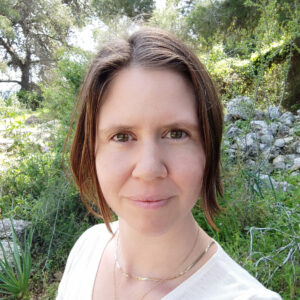
Agi Wittich is a yoga practitioner since two decades, and is a certified Iyengar Yoga teacher. Wittich studied Sanskrit and Tamil at the Hebrew University of Jerusalem, Israel, completing a PhD with a focus on Hinduism, Yoga, and Gender. She has published academic papers exploring topics such as Iyengar yoga and women, the effects of Western media on the image of yoga, and an analysis of the Thirumanthiram yoga text.