Knowledge, Practice, and Healing
untitled design (10)

Reading: Pages 99-120

Live Session: March 15, 2026 8am UTC

Zoom links are sent by Newsletter, Facebook and WhatApp

Reading Summary

This section presents the fundamental techniques of prฤแน‡ฤyฤma as conscious artistry rather than mere breathing exercises. Iyengar describes inhalation (pลซraka) as receiving cosmic energy and exhalation (rechaka) as surrendering individual energy to unite with universal consciousness. The art of retention (kumbhaka) is presented as the pause where transformation occurs โ€“ both sahita (intentional) and kevala (spontaneous) forms are explored. The grading of practitioners from beginner (adhama) to advanced (uttama) emphasizes that quality and subtlety matter more than duration or force. Bฤซja prฤแน‡ฤyฤma introduces the use of sacred sounds, particularly AUM, as vehicles for focusing the wandering mind and connecting with divine consciousness. The chapter on vแน›tti prฤแน‡ฤyฤma distinguishes between sama vแน›tti (equal ratios) and viแนฃama vแน›tti (unequal ratios), with warnings about the dangers of advanced ratio work without proper preparation and guidance.

Questions to Guide Your Reading

Read these before you start the assigned pages. They’ll help orient your attention.

  1. What is the unconscious mantra that every being naturally breathes according to the text

  2. What are the four types of sahita kumbhaka and their Sanskrit names

  3. According to the text, what is the ideal ratio for viแนฃama vแน›tti prฤแน‡ฤyฤma?

  4. What are the three syllables that emerged from the three Vedas when Prajฤpati brooded upon creation, and what do they represent?

  5. How does Iyengar describe the difference between sabฤซja and nirbฤซja prฤแน‡ฤyฤma?

Reflection prompts

Read these during or after you read to connect the teachings with your embodied experience.

  1. How do you experience the difference between mechanical breathing and conscious prฤแน‡ฤyฤma?

  2. What is your relationship to retention (kumbhaka) โ€“ do you approach it with curiosity, fear, or ambition?

  3. How do you balance the desire for progression in prฤแน‡ฤyฤma with the need for patience and gradual development?

Notes from our Sessions

These will be made available 24-48 hours after the session

Recording of Session

These will be made available 24-48 hours after the session

lop graphics (10)

Want to Go Deeper?

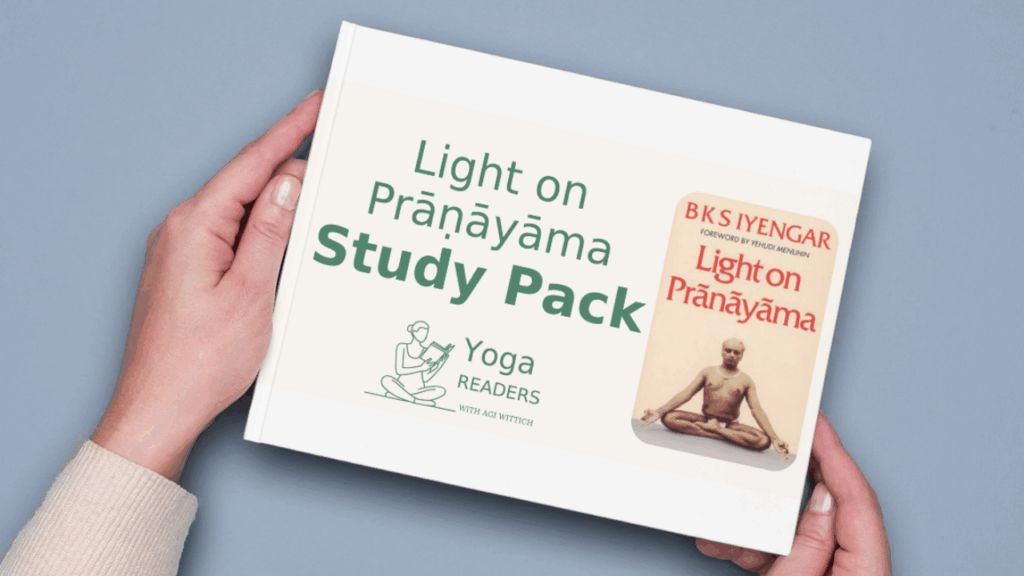
This session is part of the Light on Prฤแน‡ฤyฤma Study Pack โ€“ a complete resource for those who want ongoing access to all the recordings, study questions, and materials from this cycle.

The Study Pack includes all session recordings (watch and rewatch at your own pace), the complete Study Companion PDF with reading schedule, focus questions, reflection prompts, and practical tools for teaching, key Sanskrit terms with explanations, and a curated bibliography for further exploration.

Agi Wittich Avatar Photo

Agi Wittich PhD

Agi Wittich is a yoga practitioner since two decades, and is a certified Iyengar Yoga teacher. Wittich studied Sanskrit and Tamil at the Hebrew University of Jerusalem, Israel, completing a PhD with a focus on Hinduism, Yoga, and Gender. She has published academic papers exploring topics such as Iyengar yoga and women, the effects of Western media on the image of yoga, and an analysis of the Thirumanthiram yoga text.

Skip to content