Knowledge, Practice, and Healing

untitled design (10)

Reading: Pages 223–254

Live Session: May 10, 2026 8am UTC

Zoom links are sent by Newsletter, Facebook and WhatApp

Reading Summary

This profound section transitions from the technical mastery of prāṇāyāma to its ultimate spiritual purpose. Dhyāna (meditation) is presented not as a separate practice but as the natural flowering of refined breath work. Iyengar describes meditation as the integration of all aspects of being – body, breath, mind, intelligence, and Self – into unified awareness. The detailed instructions reveal meditation as both effortless and requiring perfect preparation through the preceding limbs of yoga. Śavāsana receives unprecedented attention as the most difficult of all practices, requiring the conscious simulation of death while maintaining complete awareness. The extensive technical instructions for relaxation demonstrate how apparent simplicity masks profound depth. Both practices represent the culmination of yoga – dhyāna as the active absorption in ultimate reality, and śavāsana as the passive dissolution of individual identity. Together they point toward the final goal of samādhi, where the practitioner experiences union with cosmic consciousness.

Questions to Guide Your Reading

Read these before you start the assigned pages. They’ll help orient your attention.

  1. What does Iyengar mean when he says dhyāna is “like deep sleep, but with a difference”?

  2. What are the “nine gates” of the body that must be closed in meditation?

  3. What hand position (mudrā) does Iyengar recommend for dhyāna and what is its significance?

  4. According to the text, why is śavāsana considered “the most difficult of yogic āsanas to perfect”?

  5. What are the four states of consciousness that yoga teaches, and which is the goal?

Reflection prompts

Read these during or after you read to connect the teachings with your embodied experience.

  1. How has your pranayama practice influenced your ability to remain present during challenging situations?

  2. What role does the concept of surrender play in your personal practice and teaching?

  3. What has been your experience with the relationship between deep relaxation and insight or clarity?

Notes from our Sessions

What do you do when the “easiest” pose in yoga suddenly feels like one of the hardest? And how do you prepare the ground for true meditation?


In our last Yoga Readers session, we explored Dhyāna and Śavāsana with honesty, depth, and a lot of heart. We opened with a simple poll: Is Śavāsana or meditation easier for you? The answers revealed how profoundly personal these practices are. Some of us panic when there’s nothing to “do.” Others discover that without an object of focus, the mind wanders wildly. Together we read Guruji’s luminous text, unpacked the farmer metaphor of cultivating the inner field, and discussed the subtle but crucial difference between enforced stillness and true inner silence.

Want to Go Deeper?

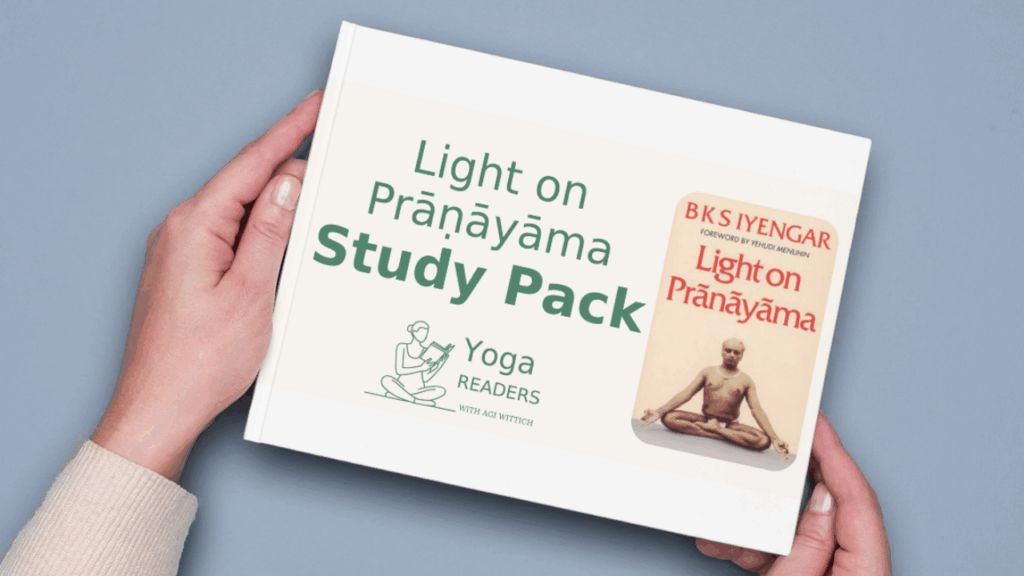
This session is part of the Light on Prāāyāma Study Pack – a complete resource for those who want ongoing access to all the recordings, study questions, and materials from this cycle.

The Study Pack includes all session recordings (watch and rewatch at your own pace), the complete Study Companion PDF with reading schedule, focus questions, reflection prompts, and practical tools for teaching, key Sanskrit terms with explanations, and a curated bibliography for further exploration.

7c698bec 5d47 483b 8dea ecf3c721a2fa

Agi Wittich PhD

Agi Wittich is a yoga practitioner since two decades, and is a certified Iyengar Yoga teacher. Wittich studied Sanskrit and Tamil at the Hebrew University of Jerusalem, Israel, completing a PhD with a focus on Hinduism, Yoga, and Gender. She has published academic papers exploring topics such as Iyengar yoga and women, the effects of Western media on the image of yoga, and an analysis of the Thirumanthiram yoga text.

Skip to content