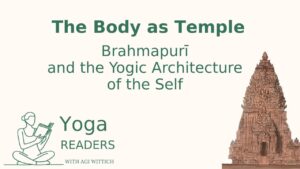
The Body as Temple
Brahmapurī and the Yogic Architecture of the Self When we practice yoga, we often hear that “the body is a temple.” But what does this metaphor actually mean within the yogic tradition? And why does B.K.S. Iyengar return so often

Brahmapurī and the Yogic Architecture of the Self When we practice yoga, we often hear that “the body is a temple.” But what does this metaphor actually mean within the yogic tradition? And why does B.K.S. Iyengar return so often
At the beginning of Light on Prāṇāyāma, B.K.S. Iyengar mentions, almost in passing, the concept of Hiraṇyagarbha. He does not stop to explain it, trace its sources, or devote a systematic discussion to it. As with many such references in
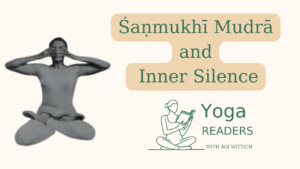
In the rich tradition of yoga, Śaṇmukhī Mudrā stands as a profound technique for sensory withdrawal and inner awareness. As Geeta Iyengar explains in “Yoga: A Gem for Women,” this mudrā is “dedicated to the six-headed Kartikeya, the leader of
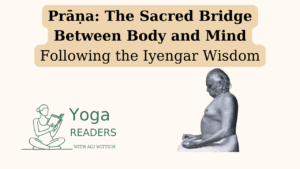
“Prāṇa is the vehicle of consciousness.” — B.K.S. Iyengar, Light on Life This concise yet expansive statement from B.K.S. Iyengar reveals a foundational truth: prāṇa, often translated simply as “breath,” is in fact the dynamic force that binds the various
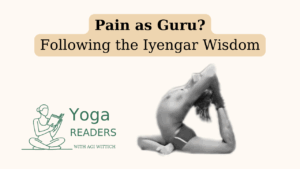
“Pain is your guru.” — B.K.S. Iyengar, Light on Life This bold teaching from B.K.S. Iyengar often provokes discomfort—not just because it involves pain, but because it asks us to reconsider our relationship with difficulty altogether. What if pain—whether physical,
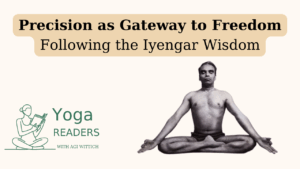
“Asana is perfect firmness of body, steadiness of intelligence, and benevolence of spirit.”—B.K.S. Iyengar This definition invites us to rethink what it means to be precise in practice. In the Iyengar method, precision is not the pursuit of external symmetry

I recently had the oppo rtunity to share my experience of teaching yoga during wartime, and the response has been overwhelming. People from around the world have reached out, wanting to understand how yoga can serve us when everything familiar

In the realm of yoga practice, advanced āsanas often spark both fascination and fear. Yet, as Geeta Iyengar explains in “Yoga: A Gem for Women,” these complex postures serve a profound purpose beyond mere physical achievement. “Not only are they