Light on Life: Closing Communal Session
Live Session: Sunday, December 13, 2026 | 08:00 UTC The...
Read MoreKnowledge, Practice, and Healing
We have sent a 6-digit verification code to your email. Please enter it below to continue.
We have sent a 6-digit verification code to your email. Please enter it below to continue.
Live Session: Sunday, October 18, 2026 | 08:00 UTC
Our reading of Light on Life continues with Chapter 2: Stability.
Our journey inward begins with the most tangible layer of our being: the physical body.
In Chapter 2 of Light on Life, Iyengar turns to āsana and to annamaya kośa, the physical or “food” body. Yet the body he describes is much more than an anatomical structure to be strengthened, stretched or perfected. It is the starting point of the inward journey, the place where we first learn stability, sensitivity, attention and awareness.
Iyengar describes the body as both a temple for the soul and a laboratory for life. Āsana can begin with very external aims, such as health, fitness or flexibility, and he does not dismiss these aims. But with sustained practice, something changes. The work becomes increasingly subtle. Firmness is accompanied by sensitivity; physical actions demand attention; and the practice of āsana can gradually become what Iyengar describes as meditation in action.
This chapter therefore asks us to reconsider what we mean when we call a practice “physical.” If we learn through the body to become more sensitive, attentive and stable, where exactly does physical practice end and inner practice begin?
The body becomes the foundation from which the rest of the journey in Light on Life can unfold.
Main Themes
Questions to Guide Your Reading
Read these before you start the assigned pages. They’ll help orient your attention.
Reflection prompts
Read these during or after you read to connect the teachings with your embodied experience.
This section will be updated after our live session with key points, questions, and reflections from our discussion.
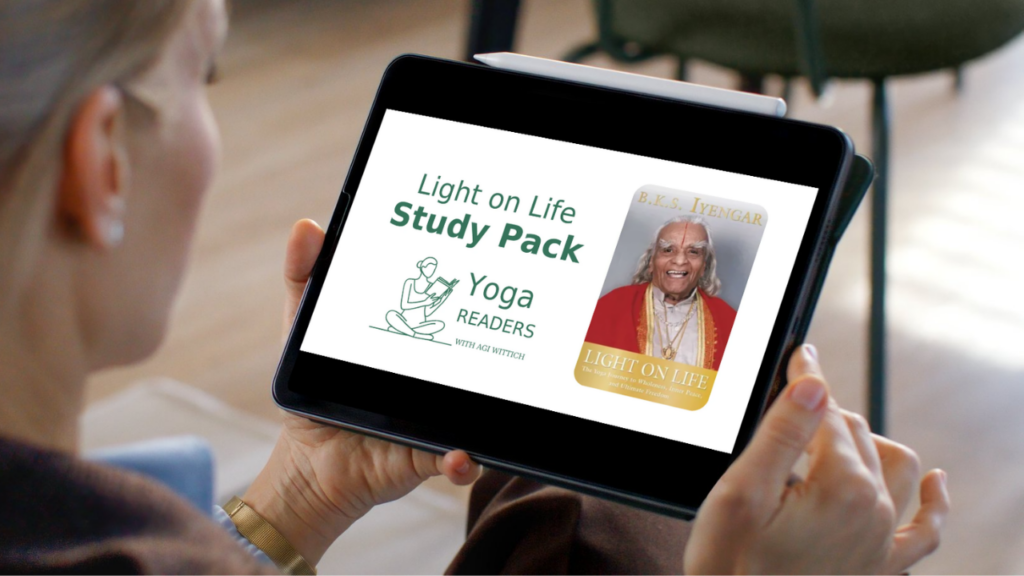
The Light on Life Study Pack is meant for dedicated students and teachers who want everything in one place.
This makes sense if you join late and want to catch up thoroughly, like to re-watch and take notes at your own pace, and want a compact resource you can revisit over months and years.
The Light on Life – Study Pack includes:
* All study session recordings (ongoing access)
* The Study Companion PDF — reading schedule, main themes, summaries, focus questions, reflection prompts, and Sanskrit terms for each gathering.
* Guiding and reflection questions, organised by session
* Sanskrit terms with transliteration and explanations
Buying the Study Pack is one way to support the time and research that go into Yoga Readers — and to receive a resource designed for long-term study.
Live Session: Sunday, December 13, 2026 | 08:00 UTC The...
Read MoreLive Session: Sunday, December 6, 2026 | 08:00 UTC Our...
Read MoreLive Session: Sunday, November 22, 2026 | 08:00 UTC Our...
Read MoreLive Session: Sunday, November 8 2026 | 08:00 UTC Our...
Read MoreLive Session: Sunday, November 8 2026 | 08:00 UTC Our reading of Light on Life continues with Chapter 3: Vitality. The Zoom link to
Live Session: Sunday, October 18, 2026 | 08:00 UTC Our reading of Light on Life continues with Chapter 2: Stability. The Zoom link to
Live Session: Sunday, October 4 2026 | 08:00 UTC Our reading of Light on Life begins with Chapter 1: The Inward Journey. The Zoom
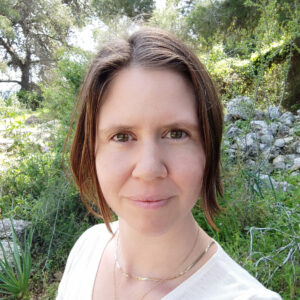
Agi Wittich is a yoga practitioner since two decades, and is a certified Iyengar Yoga teacher. Wittich studied Sanskrit and Tamil at the Hebrew University of Jerusalem, Israel, completing a PhD with a focus on Hinduism, Yoga, and Gender. She has published academic papers exploring topics such as Iyengar yoga and women, the effects of Western media on the image of yoga, and an analysis of the Thirumanthiram yoga text.