Knowledge, Practice, and Healing
We have sent a 6-digit verification code to your email. Please enter it below to continue.
Categories:
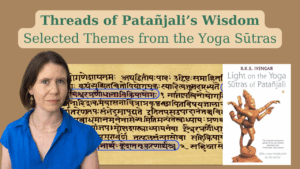
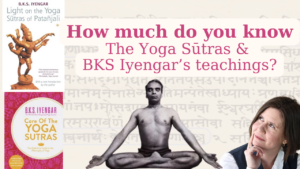
A course of selected themes from the Yoga Sutras with Dr. Agi Wittich The Yoga Sūtras of Patañjali are the philosophical heart of yoga. For yoga practitioners they are a living guide that shapes how we move, breathe, and perceive
The concepts of Viparyaya and Viparīta share a fascinating link both etymologically and conceptually. Rooted in the Sanskrit root “pari” (परि), which means “around” or “reversal,” both terms explore ideas of inversion or turning. The addition of the prefix “vi”
In the exploration of yoga philosophy, particularly in the study of the mind and its faculties, the concepts of Vikalpa and Samkalpa hold significant importance. Both terms originate from the Sanskrit root “kalpa” (कल्प), which encompasses meanings related to “imagination,”

Dhyana (ध्यान), representing the seventh limb of Patanjali’s eightfold path, embodies a state of profound meditation where the practitioner experiences complete absorption in the object of contemplation. This deep meditative state transcends ordinary concentration, emerging as the natural evolution from

Dharana (धारणा), representing focused concentration, stands as the sixth limb in Patanjali’s eight-limbed path of yoga. This essential concept transcends simple attention, embodying the practice of single-pointed focus where the mind becomes completely absorbed in one object of contemplation. Whether

In the rich tapestry of yoga philosophy, Abhyāsa (अभ्यास) emerges as a fundamental concept that transcends mere physical practice. Described in both Patanjali’s Yoga Sutras and the Bhagavad Gita, Abhyāsa represents a sustained spiritual practice that requires unwavering dedication and

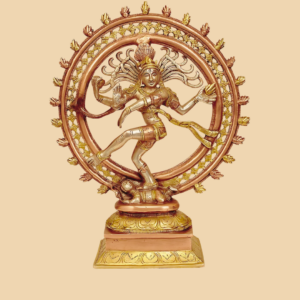
In “The Tree of Yoga”, BKS Iyengar shares a fascinating story that bridges these two arts through a divine performance. The story begins with Lord Siva inviting Lord Vishnu to witness his tandavanrtya – the cosmic dance of destruction and

In “The Tree of Yoga,” B.K.S. Iyengar presents a profound framework for understanding the natural evolution of yoga practice through four distinct stages (catur avasthā). As he notes, “The Hatha Yoga Pradīpika, the Siva Samhita and Patanjali himself all speak

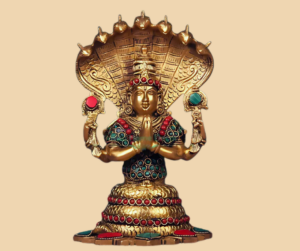
Who was Pātañjali (पातञ्जलि)? His legacy endures not just in his individual works, but in their synthesis – showing us how grammar, medicine, and yoga are not separate disciplines but interconnected paths to understanding the mystery of human existence. From