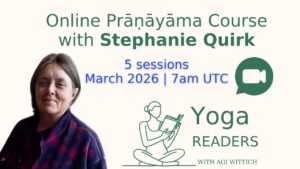
Prāṇāyāma with Stephanie Quirk – Online Mini Course
A special offering for Light on Prāṇāyāma readers We’re happy to offer this 5-session online prāṇāyāma course with senior Iyengar teacher Stephanie Quirk at
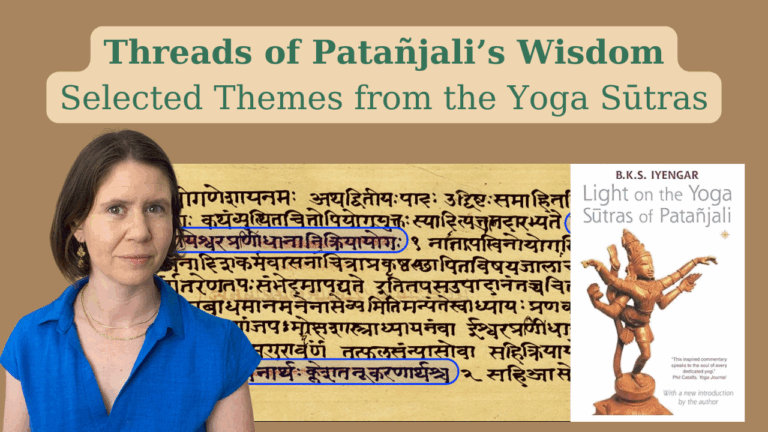
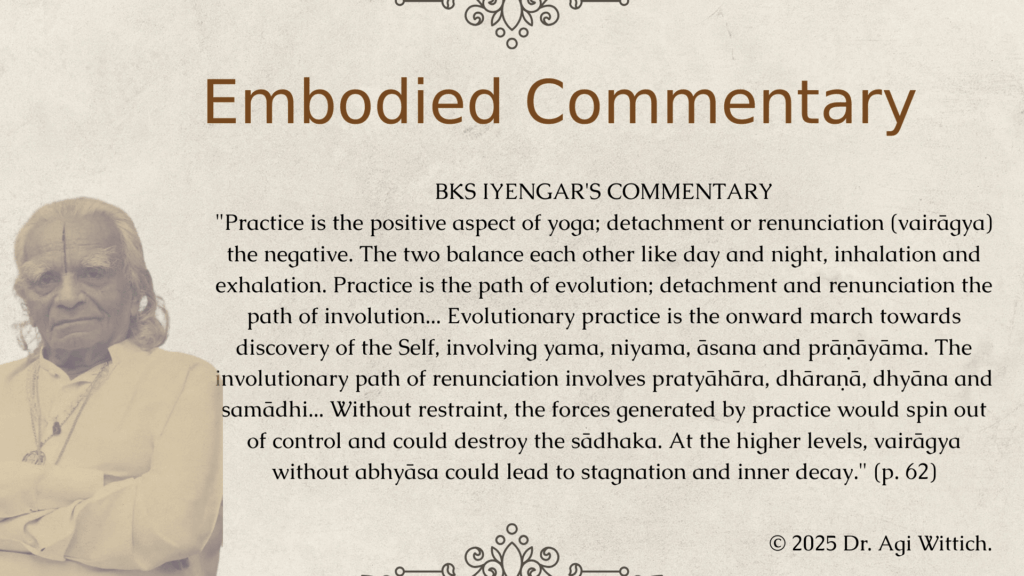
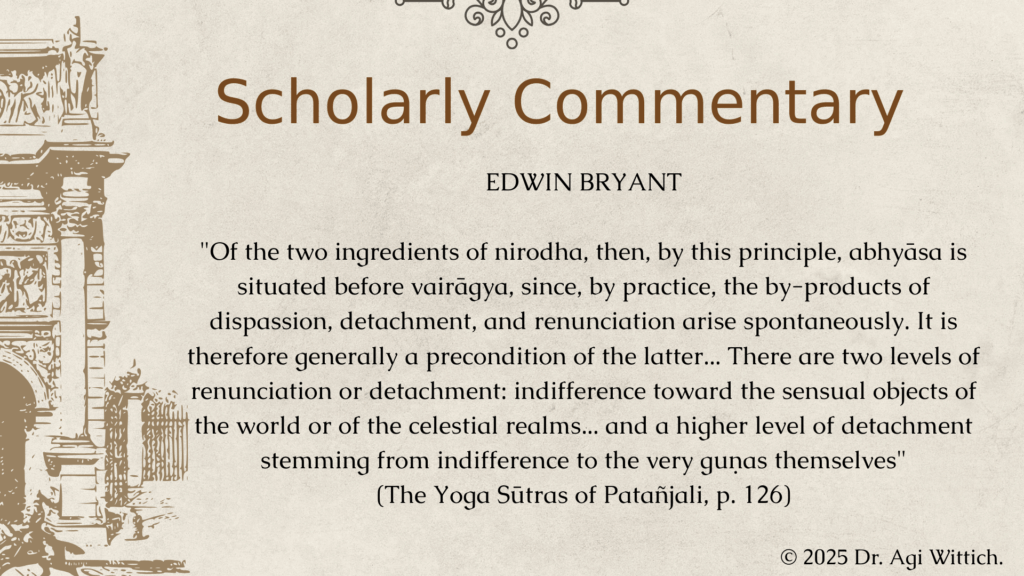
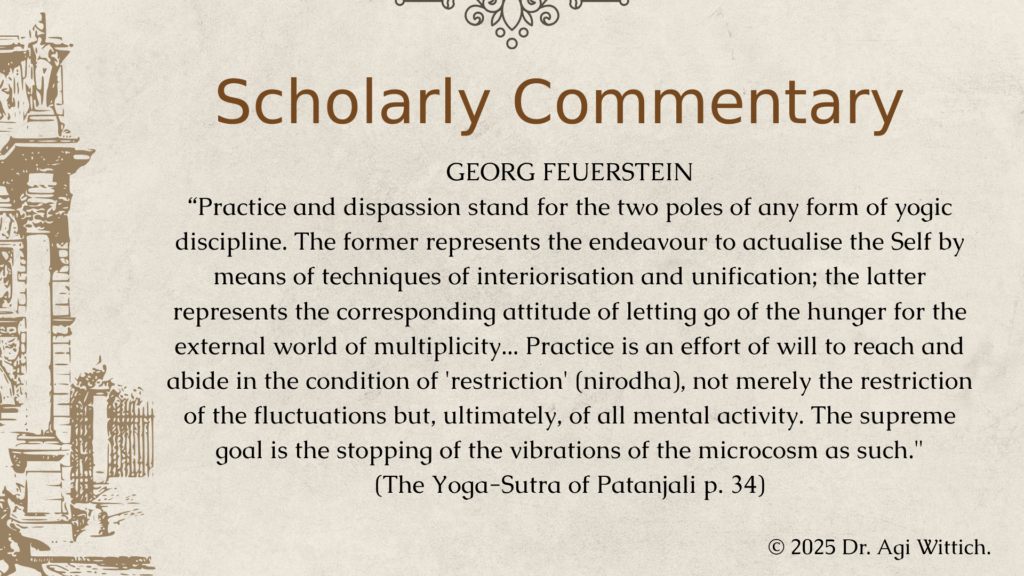
We explore Patañjali’s teaching on āsana, and more specifically, what might be the most misunderstood element of the Yoga Sutras. In just three sutras (2.46-48), Patañjali defines posture as “steady and comfortable,” achieved through “relaxation of effort and meditation on the infinite,” resulting in freedom from “the pairs of opposites.”
We’ll examine: What does āsana actually mean in Patañjali’s system? How can posture be BOTH steady (sthira) AND comfortable (sukha)? What is “relaxation of effort” (prayatna-śaithilya). Does this mean no effort, or a different quality of effort? What does “meditation on the infinite” (ananta-samāpatti) have to do with physical posture? Why does Patañjali dedicate only three sutras to āsana when modern yoga makes it primary?
We’ll discuss three perspectives: Vyāsa’s classical commentary (āsana as meditation seat), Iyengar’s embodied mastery (āsana as gateway to all eight limbs), and contemporary scholarly analysis (Maas on the historical evolution of āsana, O’Brien-Kop on embodiment and philosophy).
Before our session, try the following:
Choose one āsana you can hold comfortably for 3-5 minutes (seated or reclining posture works well). Practice holding it and observe: Where in this pose do you feel steadiness (sthira)? Where do you feel ease or comfort (sukha)? Can both exist simultaneously, or do you toggle between them?
As you hold the pose, notice where you’re making unnecessary effort. Is your jaw clenched? Shoulders gripped? Breath held? Can you maintain the structure of the pose while softening what’s not needed? What happens to your mind as you hold the pose: does it become more settled or more agitated? At what point do you want to come out of the pose, and why? Is it physical necessity or mental restlessness?
Now try this: In the pose, deliberately add more effort than necessary (grip, push, force). What happens to your breath? Your mind? Then try the opposite: release all effort, and let the pose become completely passive. What happens? Can you find the place between these extremes? Where the pose has just enough engagement to be steady but enough ease to be sustainable? That’s the inquiry Patañjali invites.
A special offering for Light on Prāṇāyāma readers We’re happy to offer this 5-session online prāṇāyāma course with senior Iyengar teacher Stephanie Quirk at
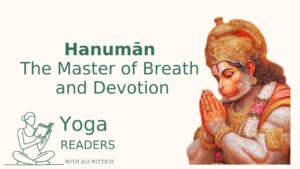
At the opening of Light on Prāṇāyāma, B.K.S. Iyengar invokes Hanumān [हनुमान्]. The reference is brief, almost passing, yet it is not incidental. Iyengar
At the beginning of Light on Prāṇāyāma, B.K.S. Iyengar mentions, almost in passing, the concept of Hiraṇyagarbha. He does not stop to explain it,