“When you do asanas, do not stretch that area directly, but first strengthen the other parts… If there is a pain in a certain part of your body, you can’t just think of quick effect… The cause of pain should be known and the yoga poses introduced judiciously in order to get rid of the pain.”
Namaste Yoga Readers!
As we begin our exploration of Part 4: “The Self and Its Journey” (pages 115-151), we find ourselves delving into the heart of yoga’s transformative power. In these pages, Iyengar offers profound insights through beautiful metaphors and practical wisdom.
🎁 Special Gift: B.K.S. Iyengar’s Legacy To commemorate Guruji’s birthday this month, I’m sharing a special lecture on B.K.S. Iyengar’s enduring legacy and his transformative contributions to yoga—details at the end of this newsletter.
“The Self and Its Journey”
In Part 4, Iyengar invites us on a profound journey of self-discovery, using the metaphor of a tree’s growth to illuminate the path of spiritual development. Just as a seed contains the full potential of a mighty tree, he explains how our soul holds the essence of our being. Through this section, he guides us from external awareness to inner realization, exploring different levels of consciousness – from gross physical awareness to increasingly subtle states. He challenges common misconceptions about meditation, presenting it not as mere quiet sitting, but as an active state of total awareness that can permeate all aspects of life. As the chapters unfold, Iyengar weaves together philosophical concepts with practical instructions, showing how yoga practice gradually dissolves the illusory boundaries between individual self and universal Self. His explanations make abstract concepts accessible and directly applicable to our practice, encouraging us to connect these profound teachings with our own life experiences.
Reflection Questions for Part 4
1. What stage of growth do you feel you’re in on your spiritual journey?
2. How do you experience the relationship between effort and stillness in your practice?
3. How do you find balance between the different aspects of yoga?
📅 Next Zoom Discussion
January 5th, 10 AM GMT
Spotlight on Ancient Wisdom:
Patañjali – The Integration of Knowledge
The story of Patañjali (पातञ्जलि) offers us a beautiful reminder of yoga’s integrative nature. His very name tells a story – derived from Pata (पत) meaning “fallen,” and Añjali (अञ्जलि) referring to the prayer position of folded hands – commemorating his miraculous birth in the hands of the yogini Gonika.
What makes Patañjali’s legacy particularly relevant to our journey through “The Tree of Yoga” is how he demonstrated that true wisdom comes from integration – of body, mind, and spirit. Through his three great works – on grammar, medicine (though debated by scholars), and yoga – he showed us that these aren’t separate disciplines but interconnected paths to understanding human existence.

Our previous discussion – of part 3
Namaste Yoga Readers! 🙏
In our last session, we explored Part Three of “The Tree of Yoga,” diving deep into Iyengar’s profound teachings on asana and pranayama. Our discussion brought to life how these practices form an integral part of our spiritual journey. The group engaged thoughtfully with key concepts including the evolution from cognitive action to meditation in motion, the essential “vitamins” of practice (faith, memory, courage, absorption, and uninterrupted awareness), and the intimate connection between breath and consciousness.
Our rich dialogue reflected on how these foundational teachings illuminate our modern practice, particularly through Iyengar’s insights about sensitivity in asana and the evolutionary and involutionary processes in pranayama. We explored how these concepts remain deeply relevant to our daily lives and personal growth.
🎥 Click the picture to watch the previous session on part 2 YouTube
Practice Wisdom
Remember to approach philosophical concepts in yoga with the same mindfulness you bring to your practice – quality over quantity. Rather than trying to absorb all the information at once, take time to digest each idea fully. Just as in asana practice, it’s better to move mindfully and with awareness than to rush forward.
Take breaks between chapters to reflect and let the teachings settle into your understanding. Allow the words to percolate through your consciousness and become part of your lived experience 🌱
With gratitude,
Agi
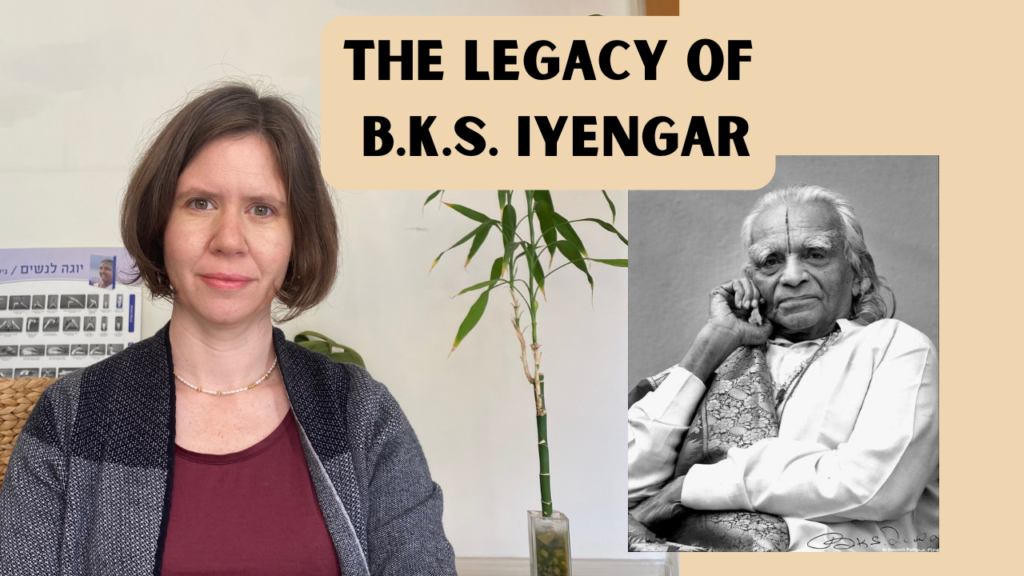
Commemorating BKS Iyengar’s legacy
BKS Iyengar’s teachings have transformed my entire life’s path – so much so that I dedicated my PhD research to studying Iyengar yoga. To commemorate his birthday (December 14th) I am sharing with you a talk that I have recorded. In the talk I explore what made his approach revolutionary: his emphasis on individual adaptation, his integration of body, mind, and breath, and his vision of yoga as both preventive and curative medicine. From his work with cricket legend Tendulkar to countless others with various conditions, his therapeutic approach has helped transform countless lives.
His words “Live happily and die majestically” weren’t just a saying – he embodied them until his final days, teaching a three-hour class to 1,200 people at age 93! His legacy lives on through each person who unrolls a mat and begins their journey of self-discovery.
Who are Yoga Readers?
Our Yoga Readers community is a diverse and passionate group, primarily composed of yoga practitioners, teachers, and enthusiasts based.
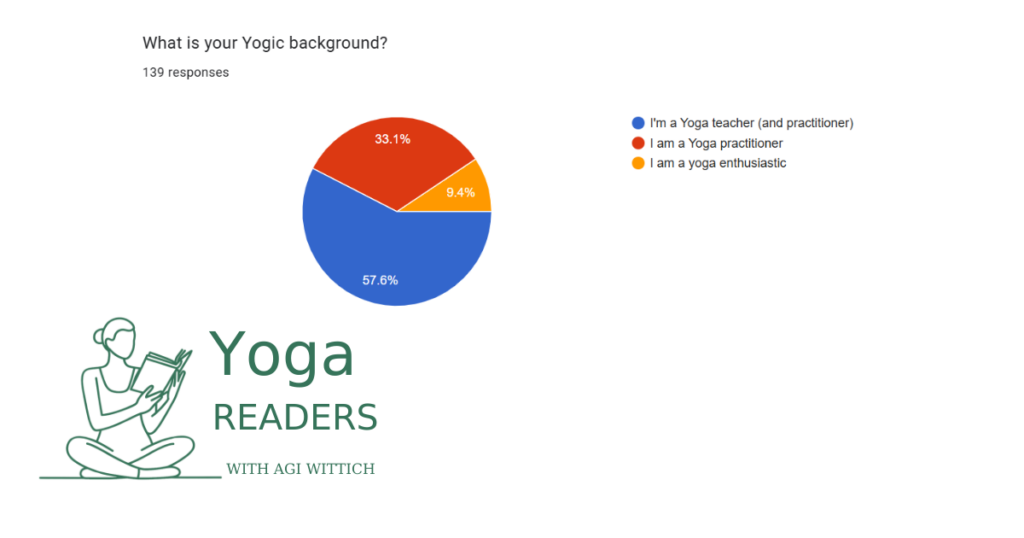
A significant portion of our community is familiar with foundational yogic texts such as Patanjali’s Yoga Sutras, the Bhagavad Gita, and the Upanishads, providing a rich common ground for nuanced discussions. At the same time, those who are new to these texts find the group’s supportive atmosphere ideal for learning and growth, as experienced members often share insights and context to make these works more accessible.
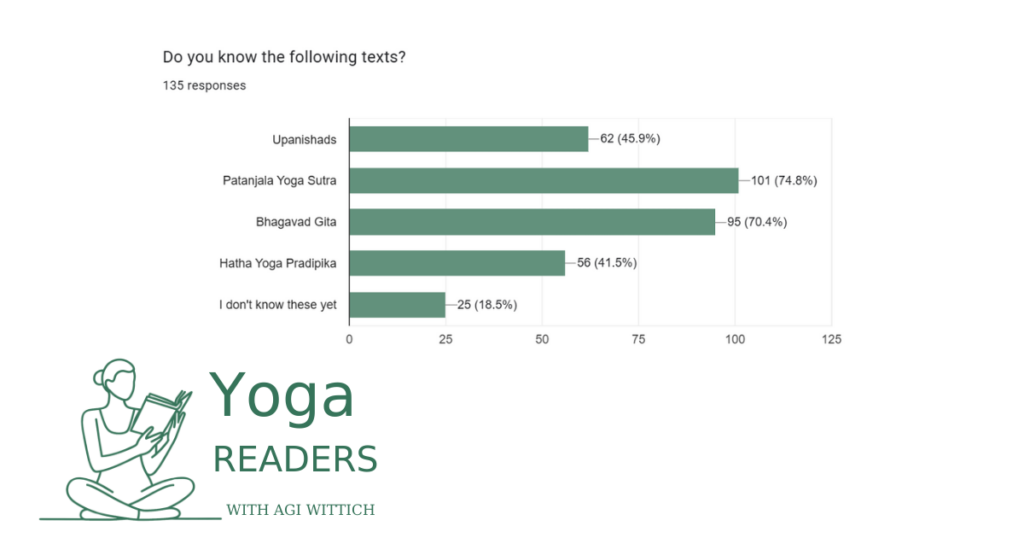
The community’s varied levels of experience and familiarity with classical texts bring unique perspectives to our discussions, allowing seasoned readers to deepen their insights and newer members to build a strong foundation. We aim to create a space where everyone feels supported in their journey of exploring yoga’s philosophical dimensions—whether revisiting beloved texts or discovering them for the first time.
Our shared love for yogic philosophy creates an environment where questions, reflections, and diverse interpretations are welcomed.