Light on Life: Closing Communal Session
Live Session: Sunday, December 13, 2026 | 08:00 UTC The Zoom link to this session is sent via our Newsletter, Whats’app & Facebook group
Knowledge, Practice, and Healing
We have sent a 6-digit verification code to your email. Please enter it below to continue.
We have sent a 6-digit verification code to your email. Please enter it below to continue.
Date and Time: May 24, 2026 8am UTC (Coordinated Universal Time)
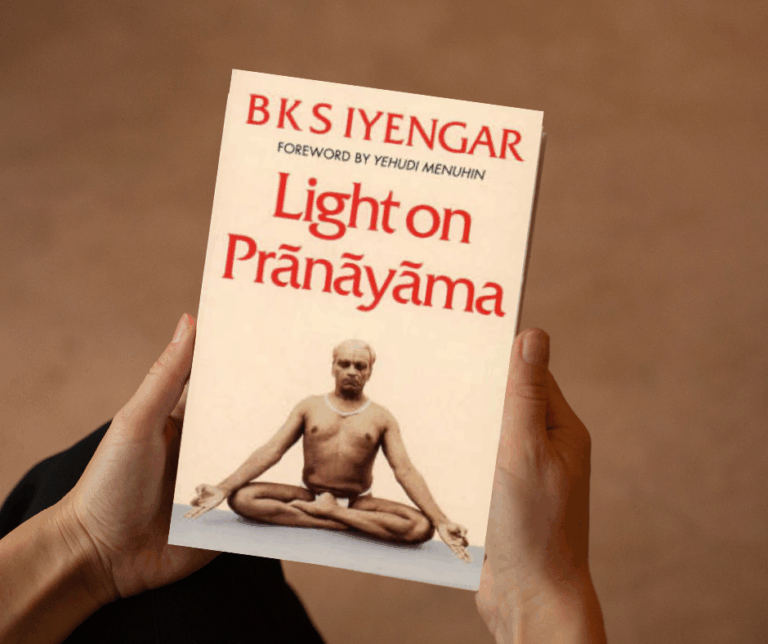
We closed the Light on Prāṇāyāma reading cycle on Saturday, May 24th. Ten Zoom sessions over five months. Thirty chapters. A community that reached New Zealand, South Africa, Thailand, Norway, India, the UK, and many countries in between. I want to write down what happened in that final gathering, as notes I would want to find later.
What we built: Ten study sessions, one opening gathering, one closing. All thirty chapters, from the early material on prāṇa and the five vāyus through to dhyāna and śavāsana, where Iyengar stops calling what he describes prāṇāyāma and moves into different language entirely.
One special session with Stephanie Quirk, offered free to everyone. Two full courses with her for those who wanted to move from reading to practice. I took part in both of them, including the first course, which I practiced in my bomb shelter during sirens. The practice was very actual during this cycle.
Behind every session went session guides, reflection prompts, Sanskrit glossaries, newsletters in English and Hebrew, WhatsApp and Facebook posts, quiz questions, and website session pages. About twenty-five newsletters. Hundreds of messages from people across the world.
Most people who buy this book set it aside before reaching the end. We read every word together, and we took the time to sit with the metaphors, the philosophy, the gaps, and the questions that take a long time to answer.
What shifted: In January, most of us came looking for technique guidance. By May the questions had changed character. We started asking why Iyengar chooses certain words, what the metaphors are doing in the body, what he leaves to the reader to discover. We stayed with the fragrance of a flower as the governing image for pūraka, and many participants told me it changed the way they practice inhalation.
One question from Session 1, about when āsana is ready enough for prāṇāyāma, we were still sitting with in Session 9. That is exactly what it means to read a serious text seriously.
What Community Mmebrs said: The live poll at the end of the gathering showed that patience with self-practice changed most for people, and communal reading helped most. Those two answers together say something clear about what this community is for.
In the open discussion, Nada shared that she had owned the book for fifteen years and read it properly for the first time in this cycle. Heena said the curriculum structure made her read more carefully than she ever would have alone. Martina said she valued that the only expectation was to show up. Isabelle connected her personal history with breathing, including surgeries related to a cleft palate she was born with, to what she discovered through yoga and through this reading. Michelle, calling in from New Zealand at nine in the evening after waking before five, worked through time zones and website access difficulties throughout the whole cycle, and ended the session by saying she thought I was an absolute legend. That moved me more than most of the tidier feedback, because it was completely real.
From the written responses across the cycle, in participants’ own words:
What an experience to read the book and feel part of a community reading it at the same time.
It will change my prāṇāyāma practice for ever. These reflections made practicing exciting again, and less strenuous.
Our sessions create an actual breathing space between the text, the thinking of it, and its practical application.
You are very clear in all your explanations, which is very rare within philosophy.
Excellent stewardship that nudges us to be more curious about the material.
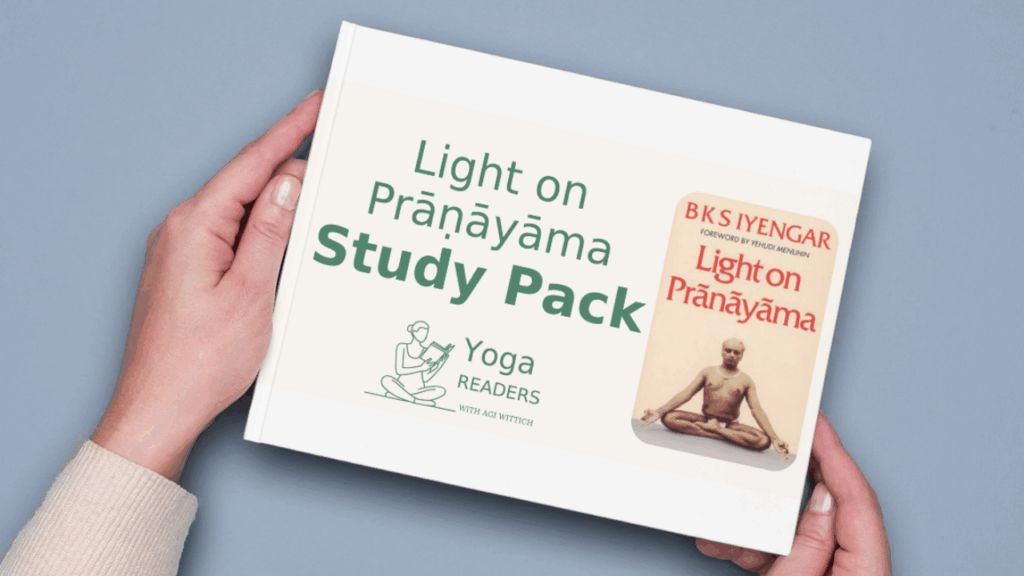
I’ve created the Light on Prāṇāyāma Study Pack – a complete resource for those who want ongoing access to all the recordings, study questions, and materials from this cycle.
The Study Pack includes all session recordings & the complete Study Companion PDF with reading schedule, focus questions, reflection prompts, and practical tools for teaching, key Sanskrit terms with explanations, and a curated bibliography for further exploration.
It’s designed for teachers, serious practitioners, and anyone who wants a lasting resource they can return to as their practice with prāṇāyāma matures.
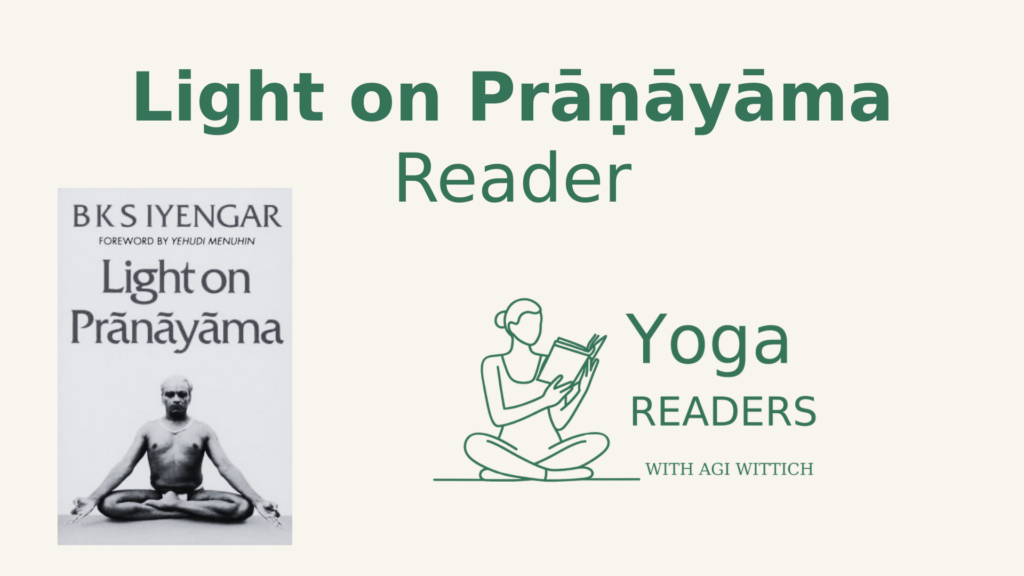
The Light on Prāṇāyāma Reader is the document I am most proud of from this cycle! It is a map of the book, built to be used alongside it.
It traces three threads across all thirty chapters: pūraka (inhalation), recaka (exhalation), and kumbhaka (retention). Each thread runs from its first appearance in the preparatory chapters through its physiological, energetic, and philosophical development, including the final chapters on meditation and śavāsana where the breath arrives at its destination and Iyengar stops calling what is happening prāṇāyāma.
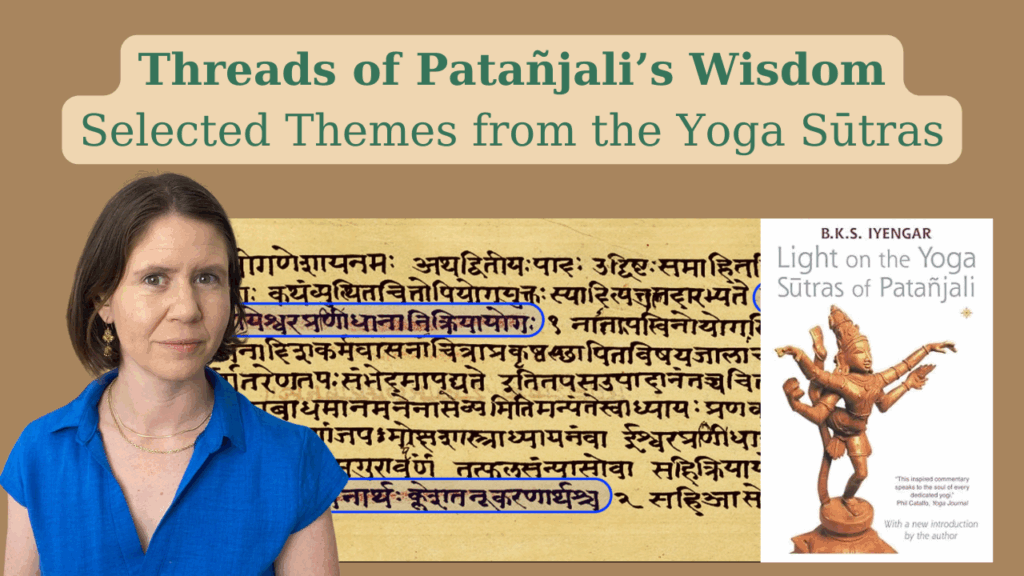
This is an eight-session course for yoga teachers and serious practitioners who want to read the Yoga Sūtras with the same depth and care we brought to Iyengar’s books.
We read the text closely. We work with the Sanskrit. We ask what Patañjali is actually saying, where the text is genuinely ambiguous, and how classical teaching meets contemporary practice.
I ran this course once before, to about twenty-five participants, with very strong response. We will run it again. All sessions are recorded and all reading materials come as PDFs — so the full cycle is available to everyone who registers, regardless of whether you can attend live.
Patañjali is not easy reading. But we just finished Iyengar’s most demanding book together. I think we are ready.
Live Session: Sunday, December 13, 2026 | 08:00 UTC The Zoom link to this session is sent via our Newsletter, Whats’app & Facebook group
Live Session: Sunday, December 6, 2026 | 08:00 UTC Our reading of Light on Life begins with Chapters 6 & 7. The Zoom link
Live Session: Sunday, November 22, 2026 | 08:00 UTC Our reading of Light on Life cintinues with Chapters 4 & 5: Clarity & Wisdom
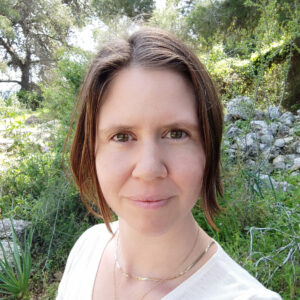
Agi Wittich is a yoga practitioner since two decades, and is a certified Iyengar Yoga teacher. Wittich studied Sanskrit and Tamil at the Hebrew University of Jerusalem, Israel, completing a PhD with a focus on Hinduism, Yoga, and Gender. She has published academic papers exploring topics such as Iyengar yoga and women, the effects of Western media on the image of yoga, and an analysis of the Thirumanthiram yoga text.