Reading: Pages 152–184
Live Session: April 11, 2026 8am UTC
Zoom links are sent by Newsletter, Facebook and WhatApp
Reading Summary
This section explores specialized prāṇāyāma techniques that require particular skills and serve specific purposes. Bhrāmarī (humming bee breath) creates internal sound vibrations that calm the nervous system and prepare for meditation. Digital prāṇāyāma introduces the sophisticated art of using fingers to control nostril openings, requiring the development of extreme sensitivity and dexterity. Iyengar compares this to the skill of a master musician, emphasizing how the fingers become instruments for refining the flow of prāṇa. Bhasrikā (bellows breath) and kapālabhātī represent vigorous, heating practices with specific contraindications and warnings about proper application. The cooling breaths sītalī and sītakārī work with the tongue to regulate body temperature and calm the system. Each technique represents a different approach to working with prāṇic energy, from gentle humming to vigorous pumping to precise digital control, demonstrating the vast range of possibilities within prāṇāyāma practice.
Questions to Guide Your Reading
Read these before you start the assigned pages. They’ll help orient your attention.
What does “bhrāmarī” mean and when is the best time to practice it?
Which fingers are recommended for digital prāṇāyāma and why are the fore and middle fingers not used?
What are the five elements (panchamahābhūtas) located in the nose according to Śiva Svarodaya?
What serious warning does Iyengar give about bhasrikā practice for women?
How do sītalī and sītakārī differ in tongue position?
Reflection prompts
Read these during or after you read to connect the teachings with your embodied experience.
What draws you more – the vigorous energizing practices or the cooling, calming techniques?
What role does sound (whether humming, hissing, or internal) play in your prāṇāyāma experience?
How do you balance curiosity about advanced techniques with respect for their power and potential risks?
Notes from our Sessions
In this session of Yoga Readers, we worked through chapters 21 to 24 of Iyengar’s Light on Prāṇāyāma — covering Bhrāmarī, digital prāṇāyāma, Bhastrikā, Kapālabhāti, Śītalī, and Śītakārī. We began with a live experiment (which nostril is more open right now?), moved into a real-time comparison between the Śaṇmukhī mudrā technique in the text and what most of us were actually taught in class, explored the elastic band and cork aids for Viṣṇu mudrā, and discussed the book’s warning about Bhastrikā for women. The session ends with one of the most quietly moving passages in the whole book: on the unconscious prayer that rides on every breath we take. Join us for a close reading, a few live demonstrations, and the kind of honest community conversation that only happens when people actually practise what they read.
Want to Go Deeper?
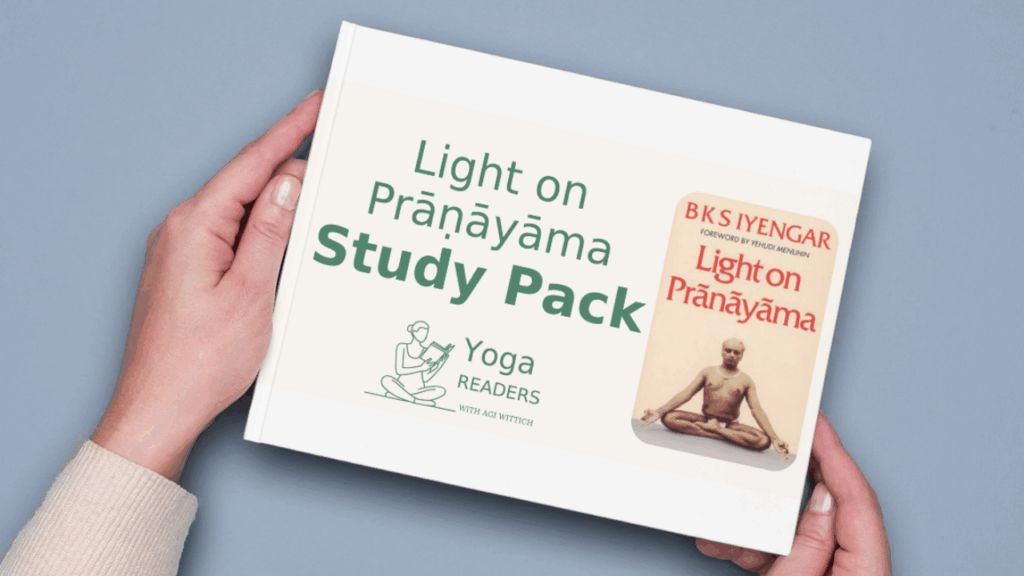
This session is part of the Light on Prāṇāyāma Study Pack – a complete resource for those who want ongoing access to all the recordings, study questions, and materials from this cycle.
The Study Pack includes all session recordings (watch and rewatch at your own pace), the complete Study Companion PDF with reading schedule, focus questions, reflection prompts, and practical tools for teaching, key Sanskrit terms with explanations, and a curated bibliography for further exploration.