Threads of Patanajlis Wisdom recording of Session 1
Session 1 – Threads in Patañjali’s Wisdom For Session 2: Yoga and the Mind We explore Patañjali’s foundational definition: “Yoga is the control of

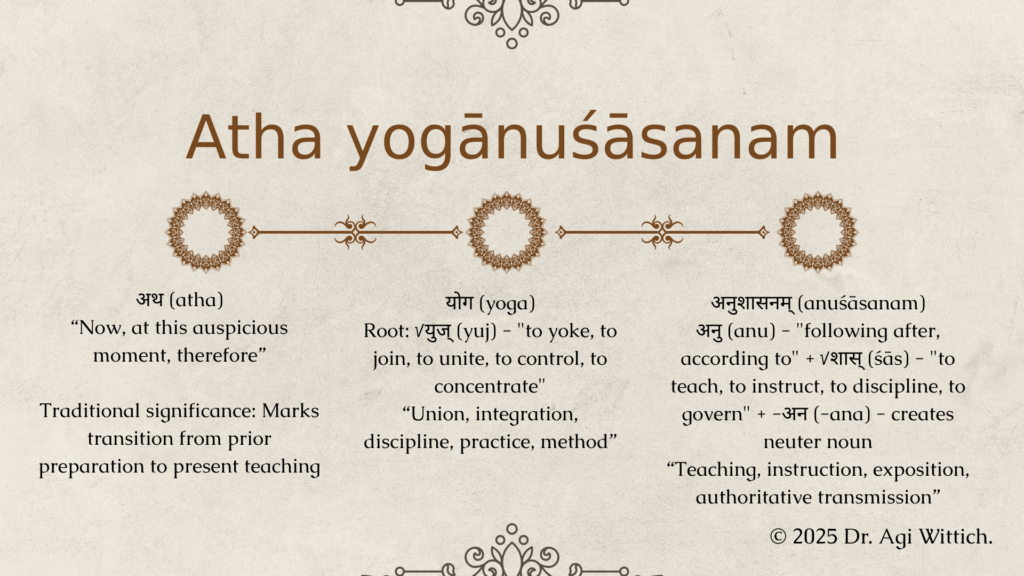
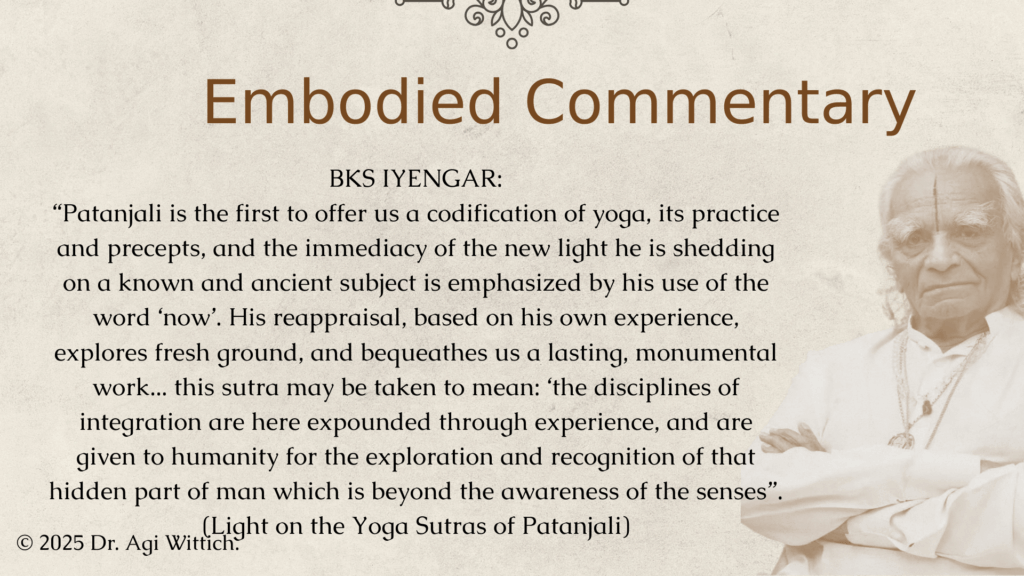
We explore Patañjali’s foundational definition: “Yoga is the control of mental modifications.”
We’ll examine what does citta mean? What are vṛtti? What does “nirodha” mean? How do we work with the turbulent mind?
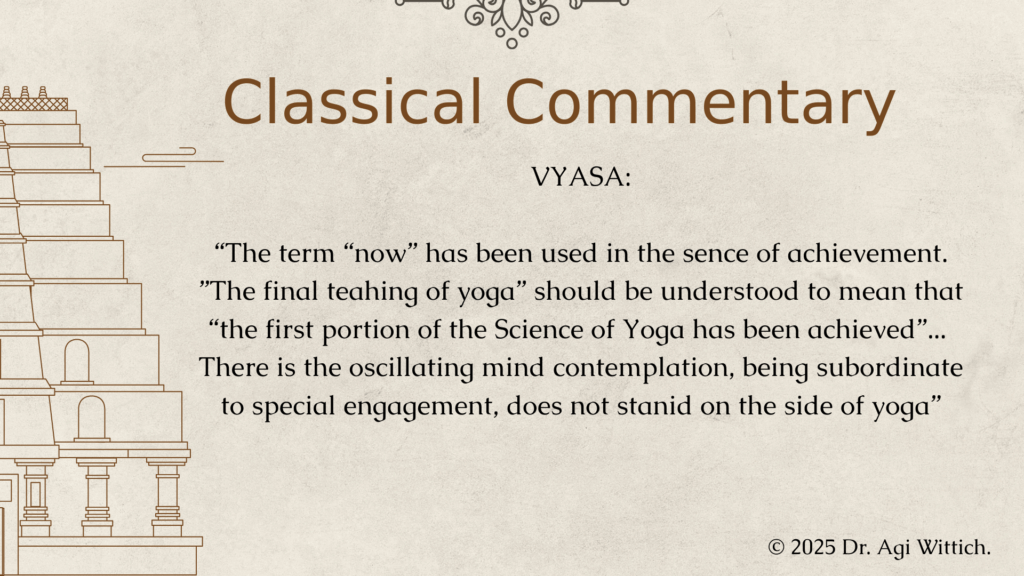
We’ll discuss three perspectives: Vyāsa’s classical commentary, Iyengar’s practitioner interpretation, and contemporary scholarly analysis.
Before our session, try the following:
Close your eyes for one minute and simply observe your mind. What do you notice? Is it busy? Quiet? Scattered? Focused? Anxious? Calm? How would you describe the quality of your mental activity? Have you ever experienced a moment of complete mental stillness—even briefly? What tends to make your mind more turbulent? What tends to calm it? When you practice āsana (if you do), what happens to your mind? Does it become more still or more busy? Have you ever been so absorbed in a pose that thoughts stopped?
Session 1 – Threads in Patañjali’s Wisdom For Session 2: Yoga and the Mind We explore Patañjali’s foundational definition: “Yoga is the control of
A course of selected themes from the Yoga Sutras with Dr. Agi Wittich The Yoga Sūtras of Patañjali are the philosophical heart of yoga.

In a recent Yoga Readers session, Dr. Lois Steinberg opened her teaching archives and personal memories, sharing stories that span four decades of study