Light on Life: Closing Communal Session
Live Session: Sunday, December 13, 2026 | 08:00 UTC The Zoom link to this session is sent via our Newsletter, Whats’app & Facebook group
Knowledge, Practice, and Healing
We have sent a 6-digit verification code to your email. Please enter it below to continue.
We have sent a 6-digit verification code to your email. Please enter it below to continue.
March 8, 2026 9:30am UTC (Coordinated Universal Time)
About Stephanie Quirk
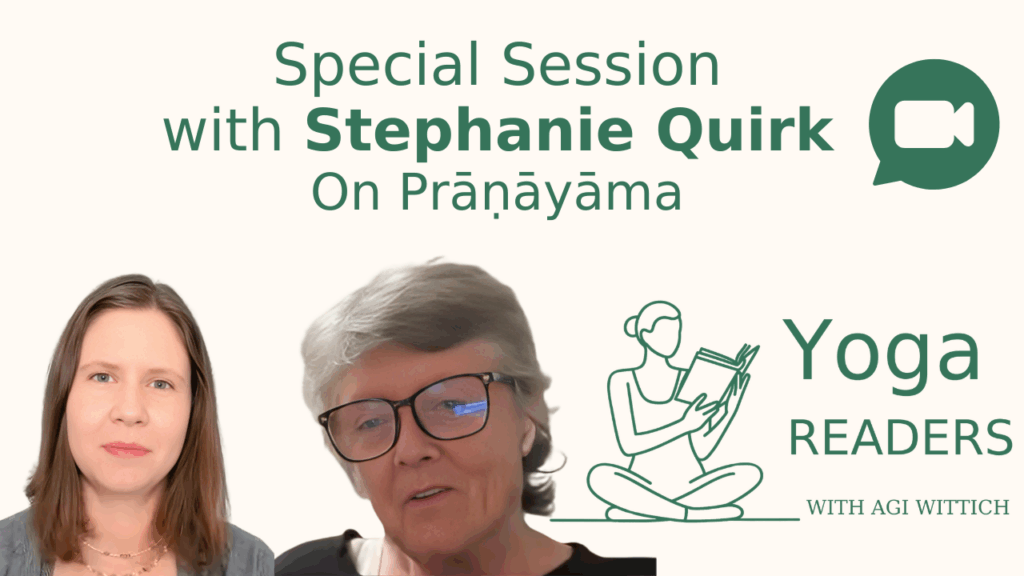
Stephanie Quirk is internationally recognised as a leader in Iyengar Yoga therapeutics. She spent over 20 years living, studying and working directly with the Iyengar family at the Ramamani Iyengar Memorial Yoga Institute (RIMYI) in Pune, assisting in the medical classes and deepening her understanding of āsana and prāṇāyāma as tools for healing and transformation.
Her teaching is known for its clarity, precision and warmth: she guides students step by step from the outer, visible actions of the body into the subtler layers of breath, perception and mind.
This special session was designed for experienced Iyengar practitioners and teachers who are interested in prāṇāyāma.
Who is this for?
Iyengar yoga teachers, teacher trainees, and experienced practitioners with a stable āsana practice who wish to deepen their understanding of prāṇāyāma in line with the Iyengar tradition.
Recently, our Yoga Readers community had the privilege of hosting a special session with senior Iyengar Yoga teacher Stephanie Quirk. Stephanie is internationally known for her deep work in Iyengar Yoga therapeutics and for the decades she spent studying and working closely with the Iyengar family at the Ramamani Iyengar Memorial Yoga Institute in Pune. For more than twenty years she observed, assisted, and learned directly from B.K.S. Iyengar, Geeta Iyengar, and Prashant Iyengar.
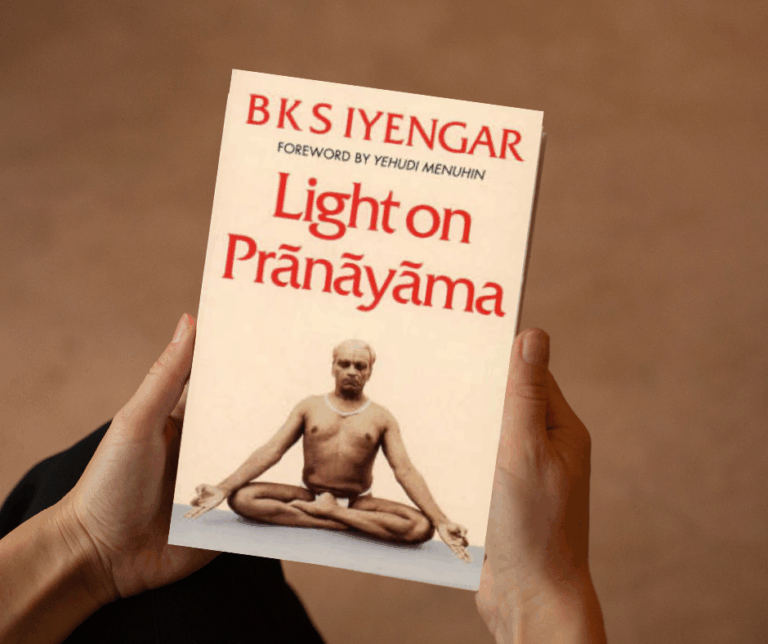
Our conversation followed months of collective reading of Light on Prāṇāyāma. Like many readers, we encountered passages that raise subtle and important questions:
When is a practitioner ready for prāṇāyāma?
Is readiness determined by time, technical skill, or something deeper?
What distinguishes breathing exercises from true prāṇāyāma practice?
Books can take us far in our understanding. But yoga is also a living tradition, transmitted through experience, observation, and dialogue with teachers who have spent decades immersed in practice. This is why I invited Stephanie to speak with our community. Listening to her was a reminder that yoga knowledge does not live only in texts—it lives in people, practice, and experience accumulated over many years.
When Is a Student Ready for Prāṇāyāma?
One of the questions we discussed is familiar to anyone who has studied Iyengar’s writings: Guruji repeatedly emphasized that prāṇāyāma should grow out of a stable foundation in āsana.
But how does a teacher actually determine readiness? Stephanie’s answer was refreshingly nuanced. There is no universal formula. Some teachers might say six months of practice. Others might say a year. Some might look for the ability to perform headstand and shoulderstand. But in reality, these markers are only rough guides. What matters more is the quality of the practitioner’s relationship to practice.
Has the nervous system begun to settle?
Has the practitioner developed the capacity to remain steady in a posture?
Is there a growing sensitivity to the breath and its effects on the mind?
These questions cannot be answered by counting months or poses. They require observation and discernment. In the absence of a teacher with Guruji’s extraordinary insight, teachers must rely on signposts. In the Iyengar method, the ability to practice inversions often serves as a baseline indicator. Reaching that stage usually means the practitioner has already explored the major categories of āsana and that the body’s systems—circulatory, respiratory, and nervous—have been gradually prepared.
Yet even this is not absolute. Stephanie reminded us that in the medical classes in Pune, Geeta Iyengar sometimes guided people through gentle prāṇāyāma even if they had never practiced inversions at all. These were ordinary people from the city, coming with illness or difficulty. The emphasis was not technical mastery but the qualitative effect of breath on the heart and mind.
The Art of Practice
One of the most powerful ideas that emerged in our discussion was the distinction between the science of prāṇāyāma and its art. The science involves techniques: inhalation, exhalation, retention, ratios, and sequencing. But the art lies elsewhere—in the subtle relationship between breath and awareness.
Stephanie referred to a verse from the Haṭha Yoga Pradīpikā, often cited in Iyengar’s writings, describing the intimate connection between mind and breath. Wherever the breath moves, the mind follows. Whatever state the breath assumes, the mind reflects. Prāṇāyāma is therefore not merely about increasing lung capacity or controlling the breath. It is about cultivating a refined sensitivity in which breath and awareness begin to inform one another. From this perspective, the real maturity required for prāṇāyāma is not technical accomplishment but the willingness to enter into practice itself as a formative process. Practice is not simply something we perform. It becomes something that shapes us.
Breathing and Prāṇāyāma
During the discussion Stephanie also mentioned a useful distinction that Prashant Iyengar sometimes makes between Śvāsāyana and Prāṇāyāma. Śvāsāyana refers to breathing exercises—methods that work primarily with the mechanics of respiration. Prāṇāyāma, by contrast, concerns prāṇa, the subtle life force that animates the body. The difference is not merely semantic. A practitioner may perform breathing exercises for years without touching the deeper dimension of prāṇāyāma. The transition occurs when awareness becomes sufficiently refined to perceive the subtle movement of vitality within the breath. In other words, prāṇāyāma begins not when we manipulate the breath more skillfully, but when we become attentive to the life within it.
Teaching Prāṇāyāma
Another fascinating part of our conversation addressed the inner state of the teacher. When guiding others through prāṇāyāma, the teacher cannot rely solely on technical instructions. The teacher must remain deeply connected to the lived experience of the breath. Stephanie described how both B.K.S. Iyengar and Prashant Iyengar often taught with their eyes closed. They were not disengaged from the students; rather, they were anchoring their instructions in their own internal experience. To teach prāṇāyāma, one must enter inwardly. The teacher speaks from memory—not intellectual memory, but the memory embedded in the body and nervous system through years of practice. Only from that place can instructions become meaningful rather than mechanical.
Learning from Living Teachers
For me, moments like this conversation are a reminder of why I created the Yoga Readers community in the first place. Reading yoga texts together is a powerful way to deepen understanding. But equally important is the opportunity to encounter the voices of teachers who carry the living tradition forward. When we listen to people like Stephanie Quirk, we glimpse not only techniques but the culture of practice that developed around B.K.S. Iyengar and his family in Pune. We hear stories, observations, and insights that rarely appear in books.
These conversations help us understand that yoga is not simply a collection of methods. It is a continuum of learning, transmitted across generations through practice, dialogue, and reflection. I am grateful to Stephanie for sharing her experience so generously with our community, and grateful to all of you who continue walking this path of study and practice together.
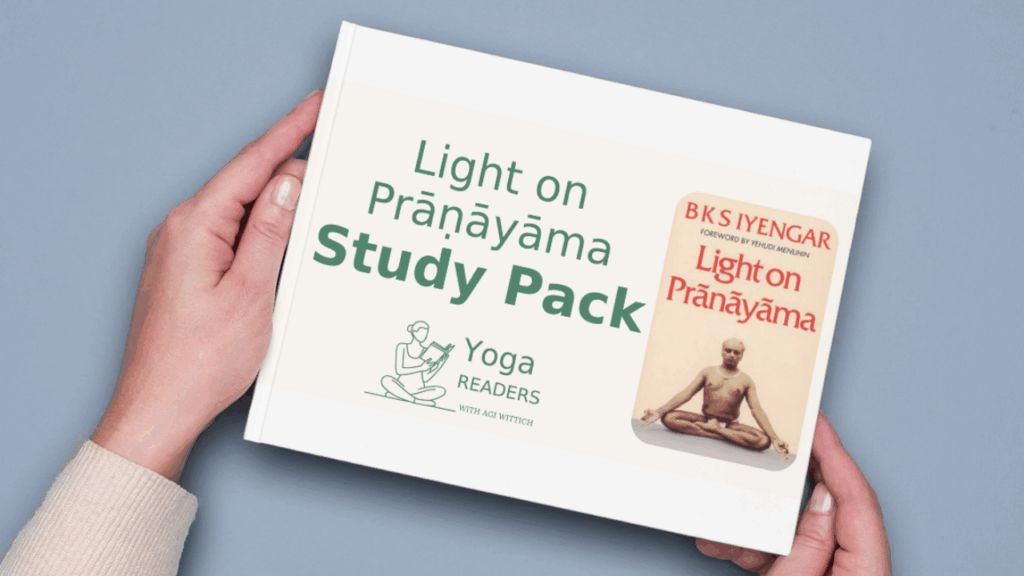
I’ve created the Light on Prāṇāyāma Study Pack – a complete resource for those who want ongoing access to all the recordings, study questions, and materials from this cycle.
The Study Pack includes all session recordings & the complete Study Companion PDF with reading schedule, focus questions, reflection prompts, and practical tools for teaching, key Sanskrit terms with explanations, and a curated bibliography for further exploration.
It’s designed for teachers, serious practitioners, and anyone who wants a lasting resource they can return to as their practice with prāṇāyāma matures.
Live Session: Sunday, December 13, 2026 | 08:00 UTC The Zoom link to this session is sent via our Newsletter, Whats’app & Facebook group
Live Session: Sunday, December 6, 2026 | 08:00 UTC Our reading of Light on Life begins with Chapters 6 & 7. The Zoom link
Live Session: Sunday, November 22, 2026 | 08:00 UTC Our reading of Light on Life cintinues with Chapters 4 & 5: Clarity & Wisdom
Agi Wittich is a yoga practitioner since two decades, and is a certified Iyengar Yoga teacher. Wittich studied Sanskrit and Tamil at the Hebrew University of Jerusalem, Israel, completing a PhD with a focus on Hinduism, Yoga, and Gender. She has published academic papers exploring topics such as Iyengar yoga and women, the effects of Western media on the image of yoga, and an analysis of the Thirumanthiram yoga text.