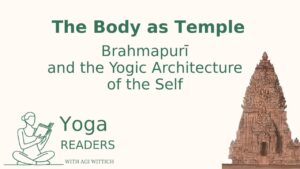
The Body as Temple
Brahmapurī and the Yogic Architecture of the Self When we practice yoga, we often hear that “the body is a temple.” But what does this metaphor actually mean within the yogic tradition? And why does B.K.S. Iyengar return so often
Knowledge, Practice, and Healing
Categories:
Brahmapurī and the Yogic Architecture of the Self When we practice yoga, we often hear that “the body is a temple.” But what does this metaphor actually mean within the yogic tradition? And why does B.K.S. Iyengar return so often
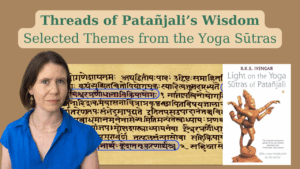
A course of selected themes from the Yoga Sutras with Dr. Agi Wittich The Yoga Sūtras of Patañjali are the philosophical heart of yoga. For yoga practitioners they are a living guide that shapes how we move, breathe, and perceive
In a recent Yoga Readers session, Dr. Lois Steinberg opened her teaching archives and personal memories, sharing stories that span four decades of study with B.K.S. Iyengar (Guruji) and Geeta Iyengar (Geetaji). What emerged was not just yoga history, but
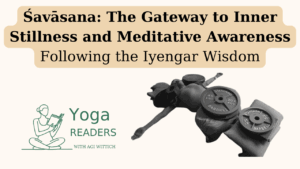
In the vast and intricate repertoire of yoga āsanas (postures), Śavāsana (Corpse Pose) holds a unique and profoundly significant position. Often superficially perceived as a simple end-of-practice rest, its mastery reveals the deepest tenets of yogic philosophy and self-realization. As
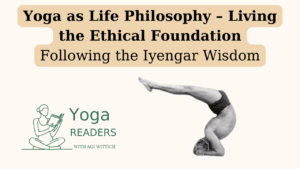
“Yoga is the rule book for playing the game of Life, but in this game no one needs to lose.” This profound statement from Light on Life reframes yoga not as a practice confined to the mat, but as a
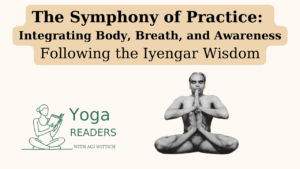
“The rhythm of the body, the melody of the mind, and the harmony of the soul create the symphony of life.” With these poetic words from Light on Life, B.K.S. Iyengar evokes an image that is not merely metaphorical but
“Prāṇa is the vehicle of consciousness.” — B.K.S. Iyengar, Light on Life This concise yet expansive statement from B.K.S. Iyengar reveals a foundational truth: prāṇa, often translated simply as “breath,” is in fact the dynamic force that binds the various
“Pain is your guru.” — B.K.S. Iyengar, Light on Life This bold teaching from B.K.S. Iyengar often provokes discomfort—not just because it involves pain, but because it asks us to reconsider our relationship with difficulty altogether. What if pain—whether physical,
“To a yogi, the body is a laboratory for life, a field of experimentation and perpetual research.”—B.K.S. Iyengar This insight from Guruji is not a metaphor but a method. In the Iyengar tradition, the mat is not a stage for
“Asana is perfect firmness of body, steadiness of intelligence, and benevolence of spirit.”—B.K.S. Iyengar This definition invites us to rethink what it means to be precise in practice. In the Iyengar method, precision is not the pursuit of external symmetry
A Pedagogical Comparison Between Light on Yoga and A Gem for Women Adho Mukha Śvānāsana, commonly known as Downward-Facing Dog, stands as perhaps the most recognizable symbol of yoga practice in the Western world. This seemingly simple yet complex asana

As we journey through life, maintaining our physical and mental vitality becomes increasingly important. While the passage of time is inevitable, how we “age” is largely within our control. For many, the golden years are a time to embrace new